Free Research Methods Resources
Download a selection of high-quality A-level Psychology research methods resources completely free. Perfect for student revision, lesson starters, homework tasks, or introducing key concepts in the classroom. Created specifically for WJEC/Eduqas Psychology but suitable for all major exam boards.
Introduction to A Level Psychology
An engaging introductory resource for the first week of A Level Psychology.
Students explore what psychology is, the scientific method, and some of the key debates in the subject through clear explanations, built-in activities and a simple classroom experiment.
A great way to introduce psychological thinking and research skills before beginning specification content.
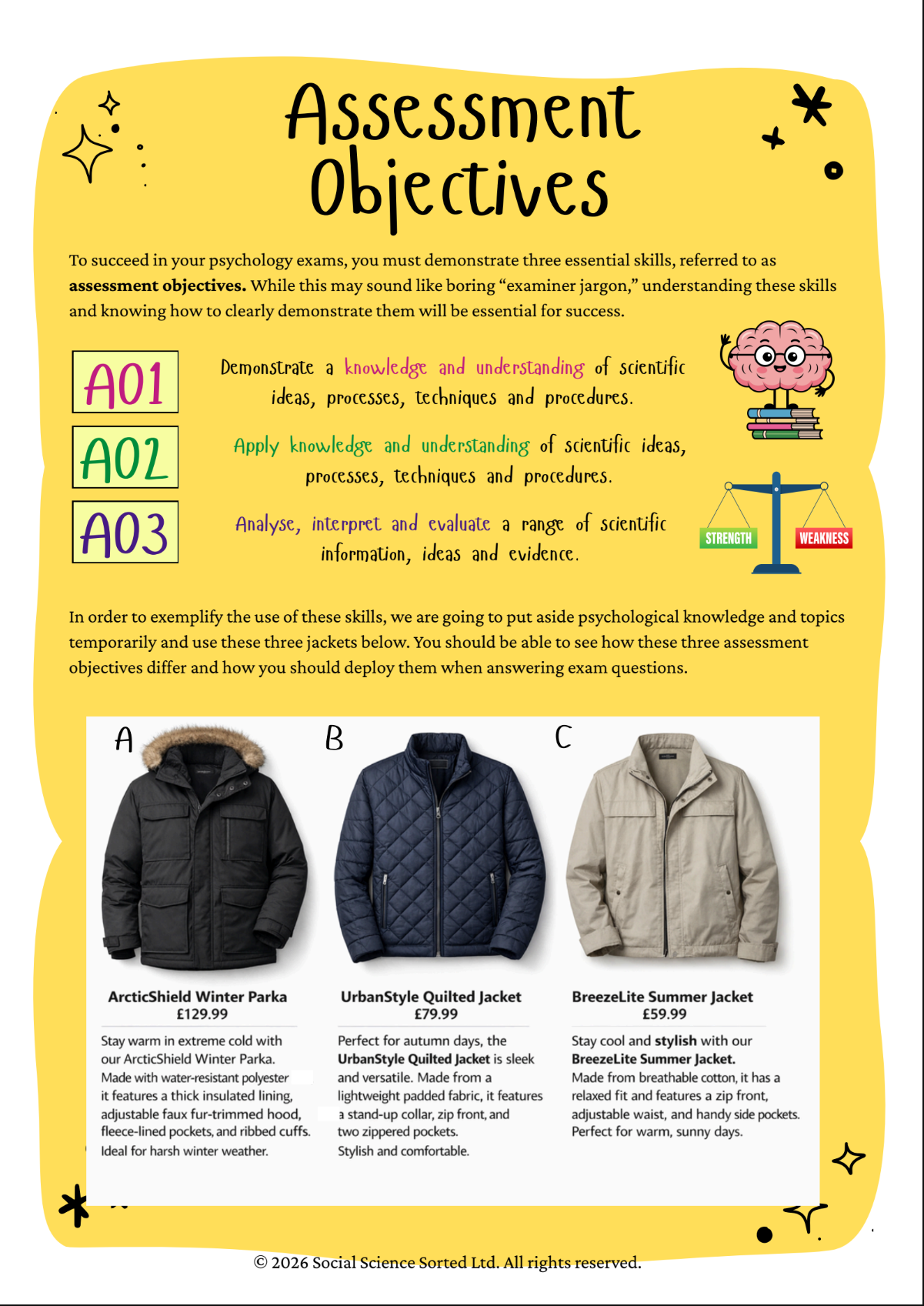
Assessment Objectives
A clear and engaging guide to the three assessment objectives used in A-level Psychology. Using practical examples and exam-style activities, this resource helps students understand the difference between AO1 knowledge, AO2 application, and AO3 evaluation skills. Ideal for improving exam technique and boosting performance across all topics.
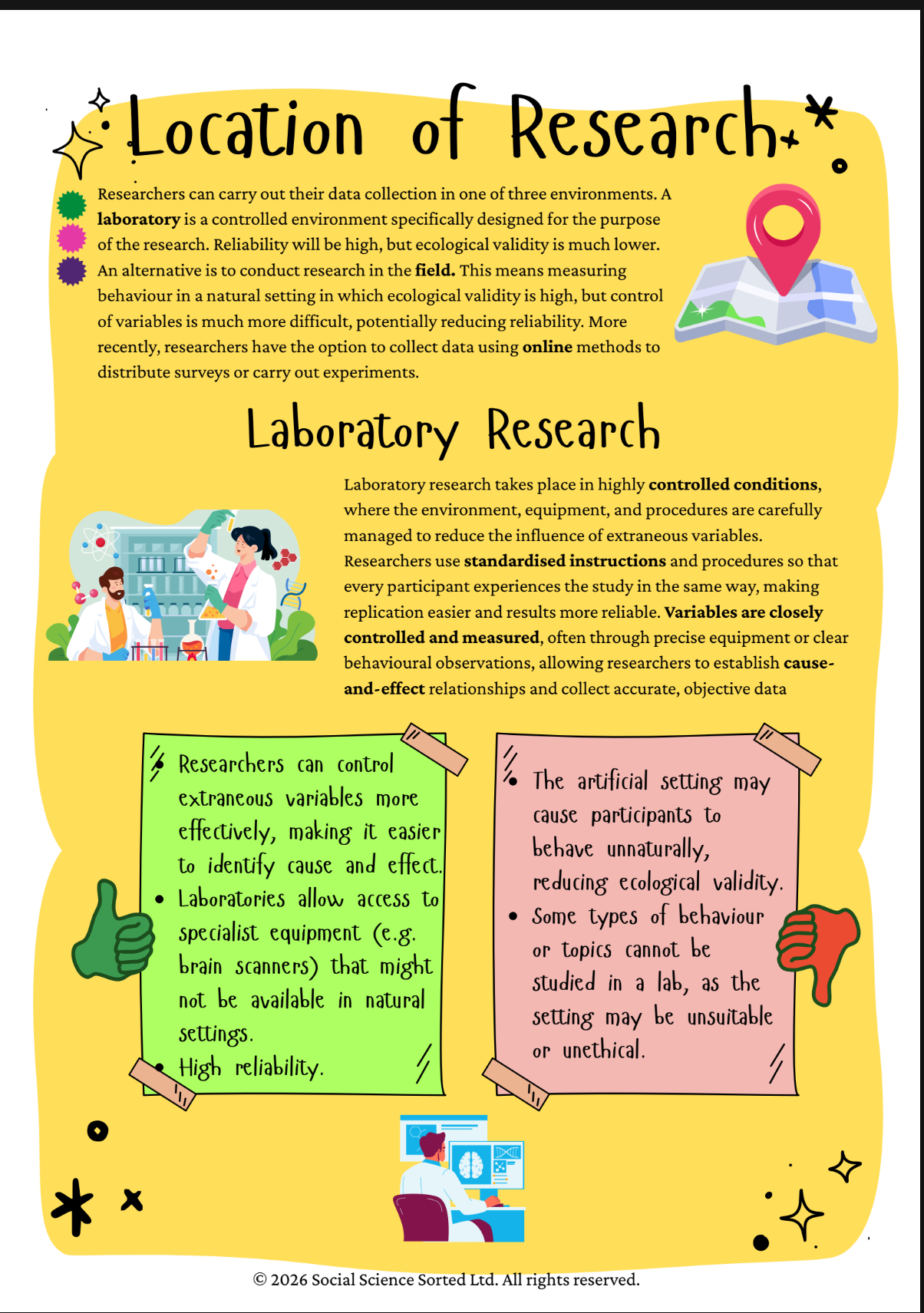
Location of Research
An accessible guide to laboratory, field, and online research. Students explore the characteristics, strengths, and weaknesses of each research setting while applying their knowledge to realistic research scenarios. Perfect for revision, homework, or classroom discussion.
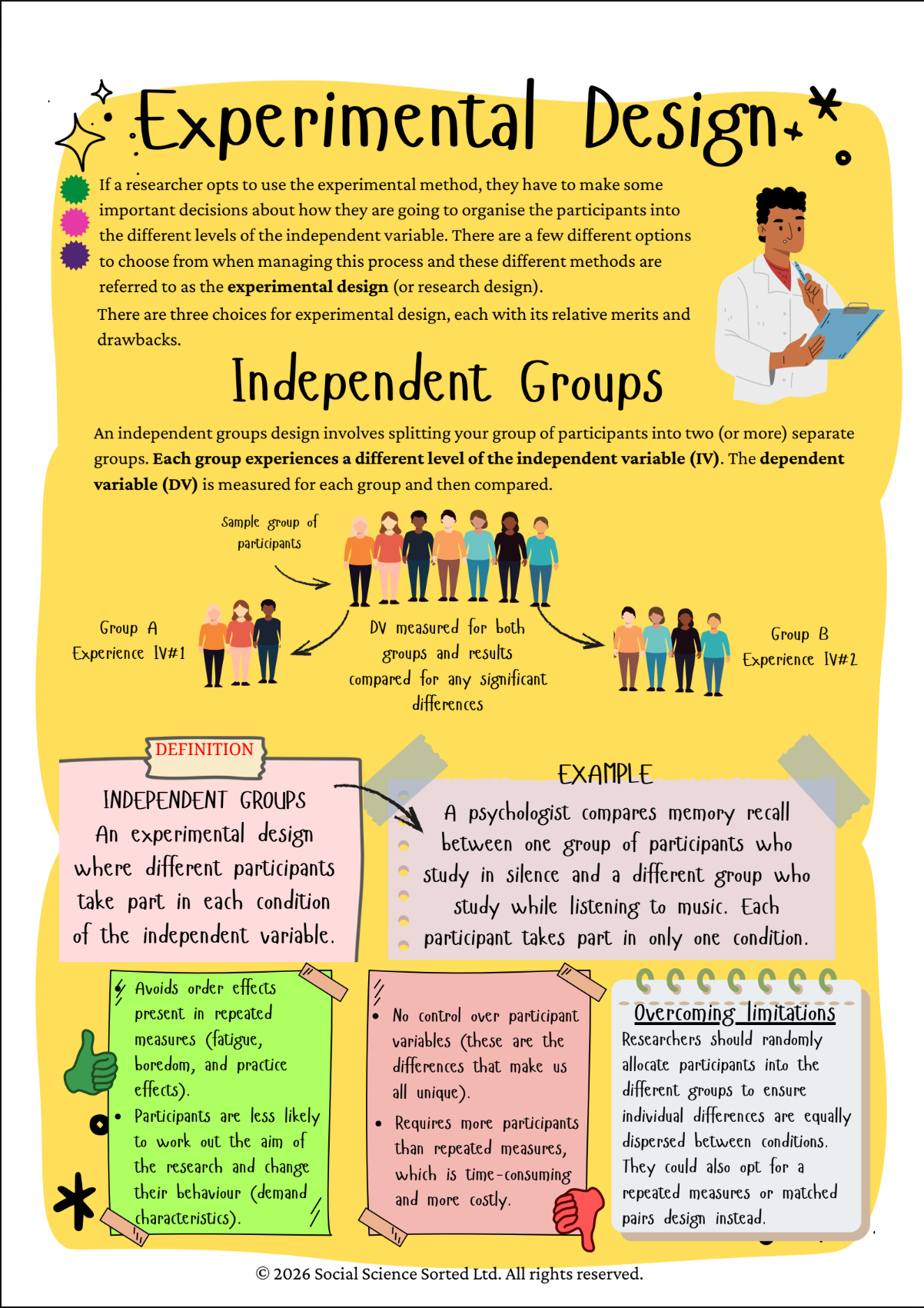
Experimental Design
A visually engaging resource covering independent groups, repeated measures, and matched pairs designs. Includes clear explanations, strengths and weaknesses, practical examples, and application activities to help students master one of the most frequently examined research methods topics.
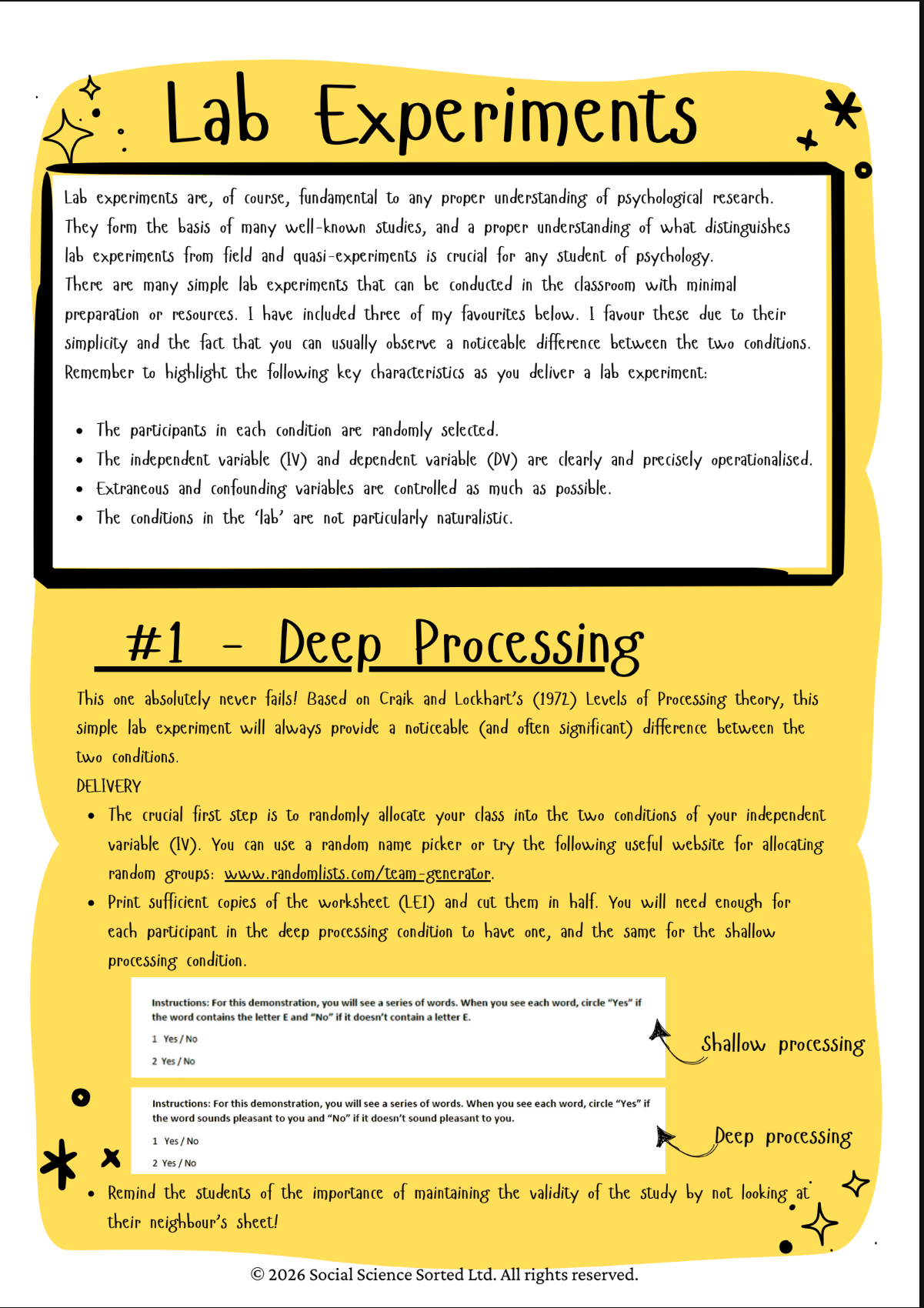
Lab Experiments
Bring research methods to life with a collection of classroom-tested laboratory experiments. Includes ready-to-use activities, worksheets, discussion points, and opportunities to develop statistical, graphical, and evaluative skills. Designed to make abstract research concepts memorable and engaging.
Experimental Design
A practical teaching resource packed with hands-on experiments that demonstrate independent groups, repeated measures, and matched pairs designs in action. Perfect for helping students move beyond definitions and develop a deeper understanding of experimental design through experience.
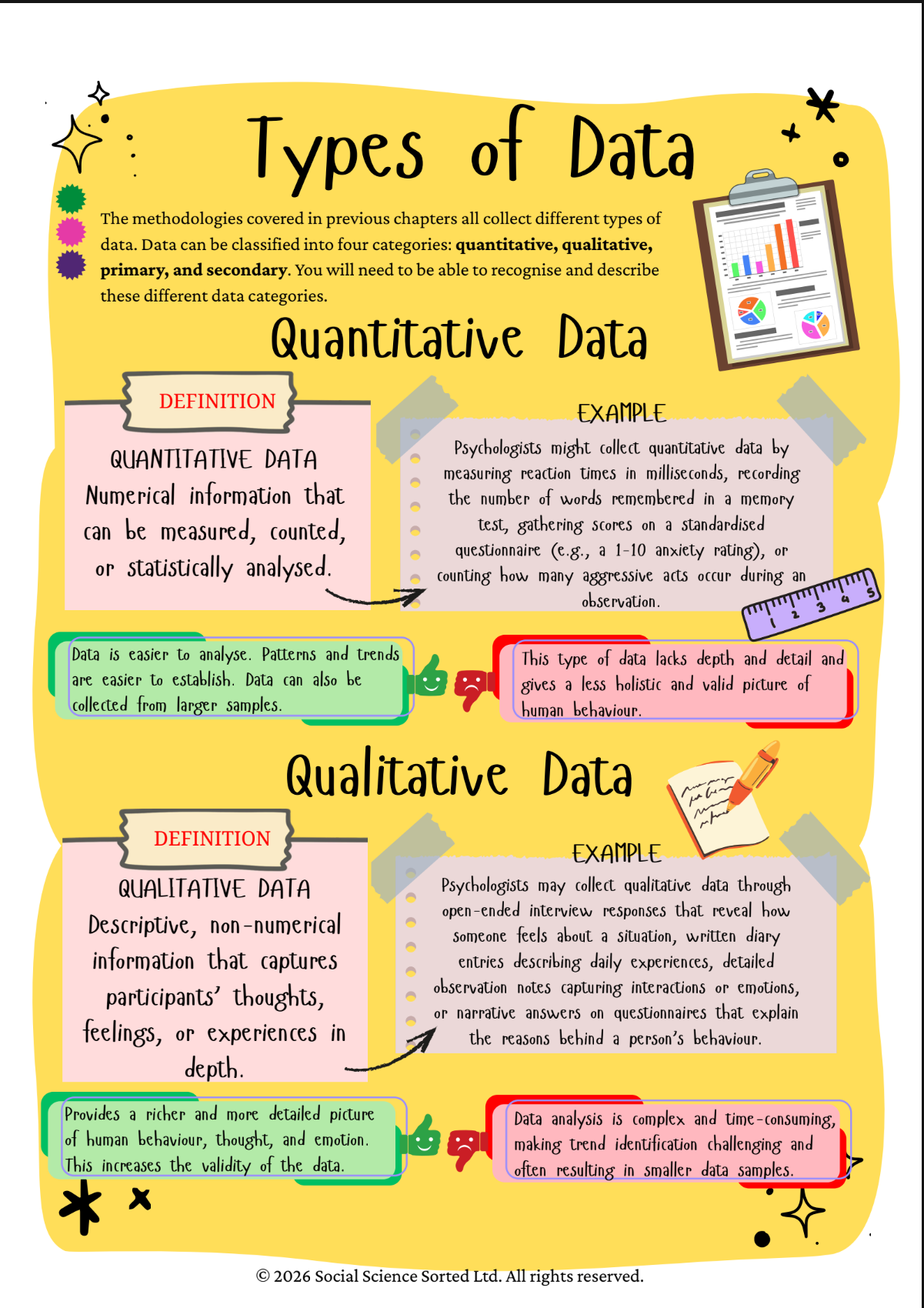
Types of Data
A concise introduction to quantitative, qualitative, primary, and secondary data. Includes clear definitions, strengths and limitations, real-world examples, and practice activities to help students confidently identify and evaluate different forms of research data.
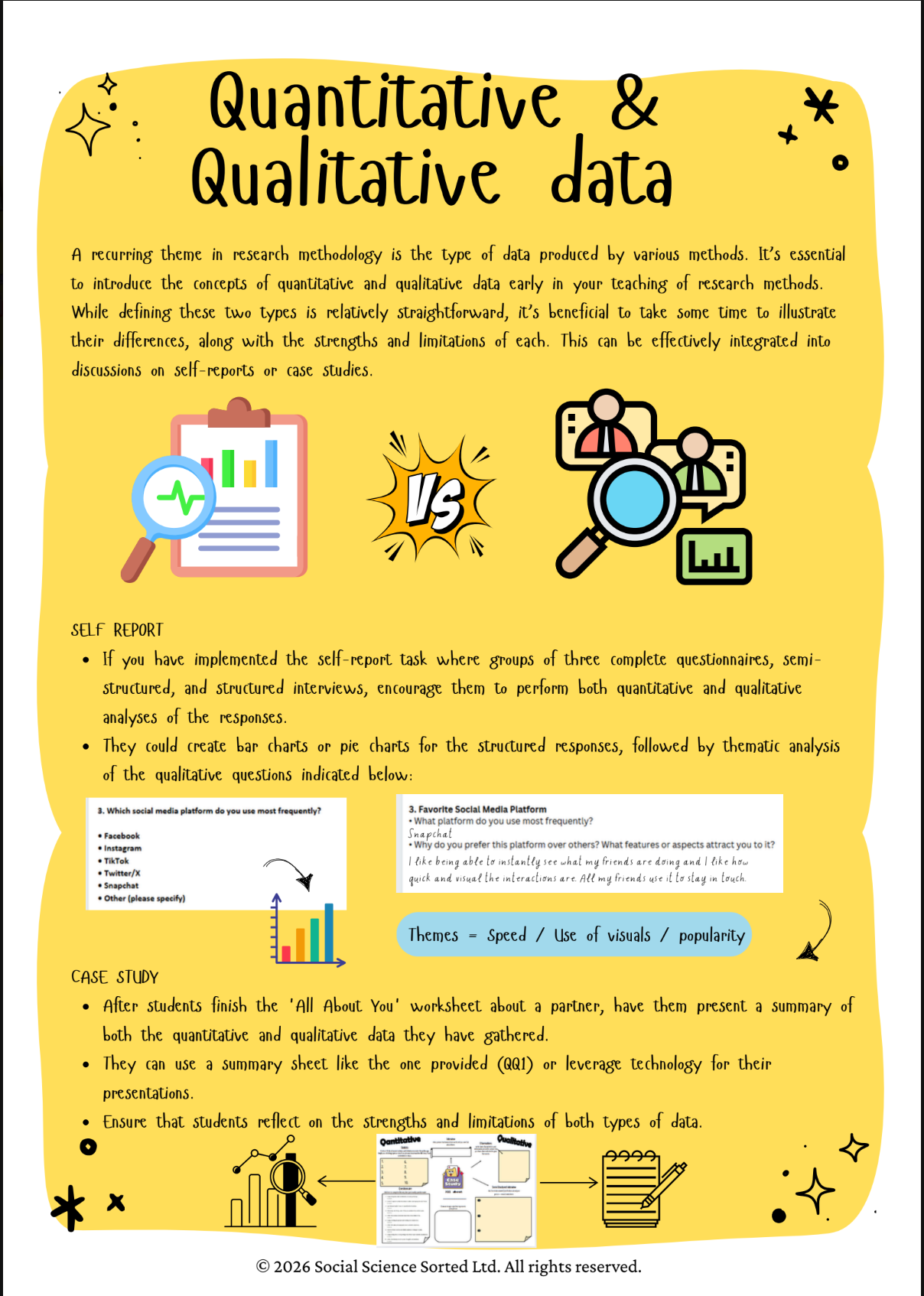
Quantitative & Qualitative data
A practical resource that helps students understand the differences between quantitative and qualitative data through engaging classroom activities, data analysis tasks, and discussion opportunities. Ideal for developing both methodological knowledge and critical thinking skills.